
 Save
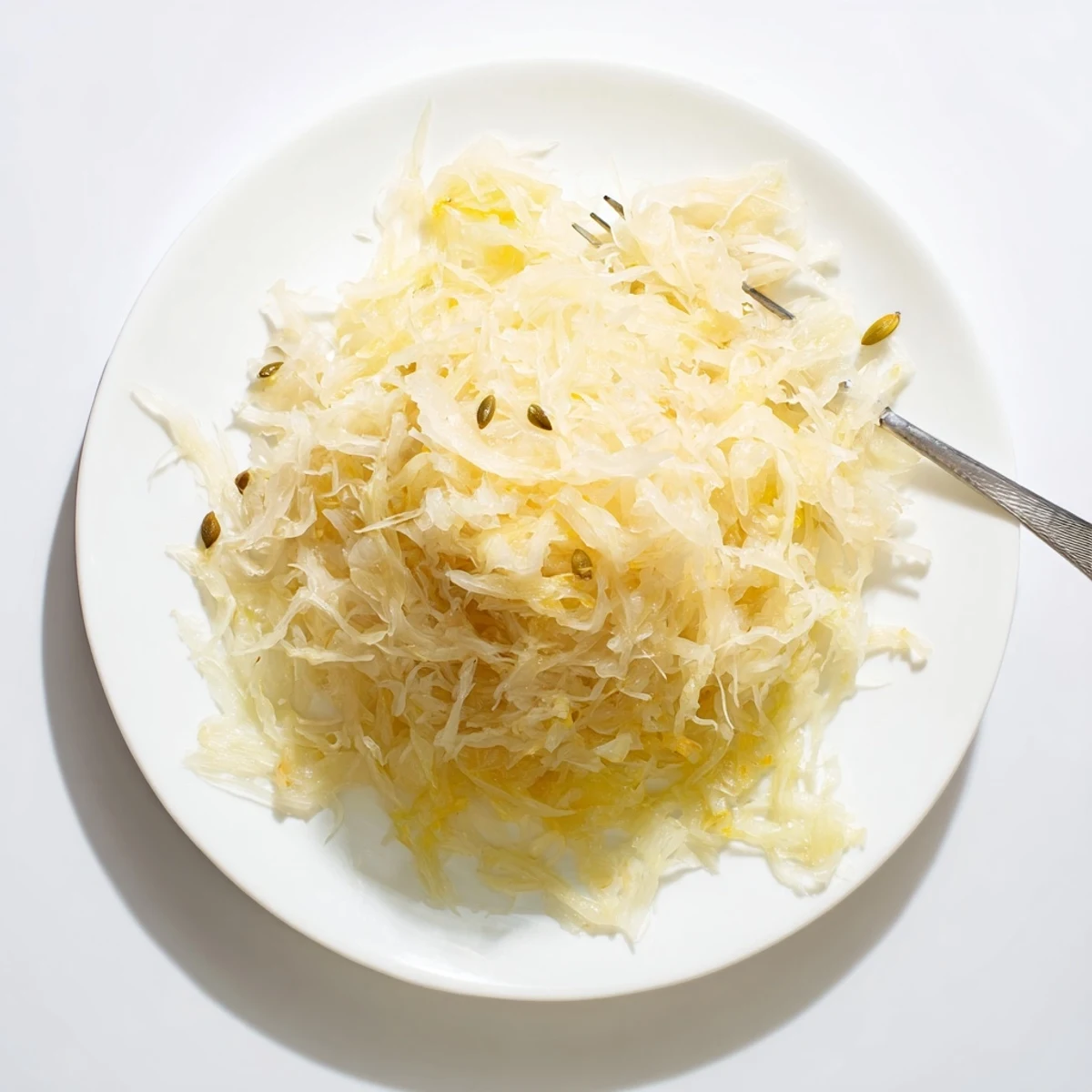
Save Create authentic German fermented cabbage using time-honored techniques. This traditional method transforms fresh white cabbage through natural fermentation, developing complex tangy flavors and beneficial probiotics over 7-21 days.
The process requires only cabbage and salt, though caraway seeds or grated carrot can add depth. Massage salt into sliced vegetables until juices release, then pack tightly into a fermentation vessel and submerge completely.
Store at room temperature away from sunlight, tasting periodically until desired sourness develops. The longer fermentation continues, the more pronounced the tang becomes. Refrigerate when satisfied with flavor intensity.
My grandmother kept a massive ceramic crock in her cellar, and every autumn the smell of fermenting cabbage would drift up the wooden stairs into the kitchen like clockwork. I thought she was performing some kind of sorcery. Turns out she was just letting salt and time do what they have done for centuries, and the results were always spectacular.
I ruined my first batch by checking on it every single day, poking and prodding until the whole thing turned mushy. A patient friend told me fermentation rewards those who can leave well enough alone, and that lesson stuck with me far beyond the kitchen.
Ingredients
- White cabbage: Choose a dense, heavy head with crisp outer leaves because flabby cabbage means flabby kraut.
- Fine sea salt: This draws out the moisture and creates the brine, so never skip it or reduce the amount.
- Caraway seeds (optional): These add a warm, earthy note that pairs beautifully with the tang.
- Grated carrot or thinly sliced apple (optional): A touch of sweetness that balances the sharpness of fermentation beautifully.
Instructions
- Prep the cabbage:
- Peel away any wilted or damaged outer leaves, quarter the head, carve out the tough core, and slice the quarters as thinly as your patience allows because uniform shreds ferment evenly.
- Salt and massage:
- Toss the shredded cabbage with salt in a large bowl, then work it with your hands for five to ten minutes until it softens and pools of liquid collect at the bottom.
- Add extras if using:
- Scatter in caraway seeds, grated carrot, or apple slices and fold everything through so the flavors distribute evenly.
- Pack it tight:
- Press the cabbage and all its juice into a sterilized crock or jar, pushing firmly until the liquid rises above the cabbage and no air pockets remain.
- Weigh it down:
- Set a fermentation weight or a small water filled jar on top to keep everything submerged, because anything exposed to air will spoil rather than ferment.
- Cover and wait:
- Drape a cloth or secure a fermentation lid and find a cool dark spot between 18 and 22 degrees where it can sit undisturbed for at least a week before you taste it.
- Taste and store:
- Start sampling after seven days and when the tang hits the level you love, move it to the refrigerator to slow the fermentation to a crawl.
 Save
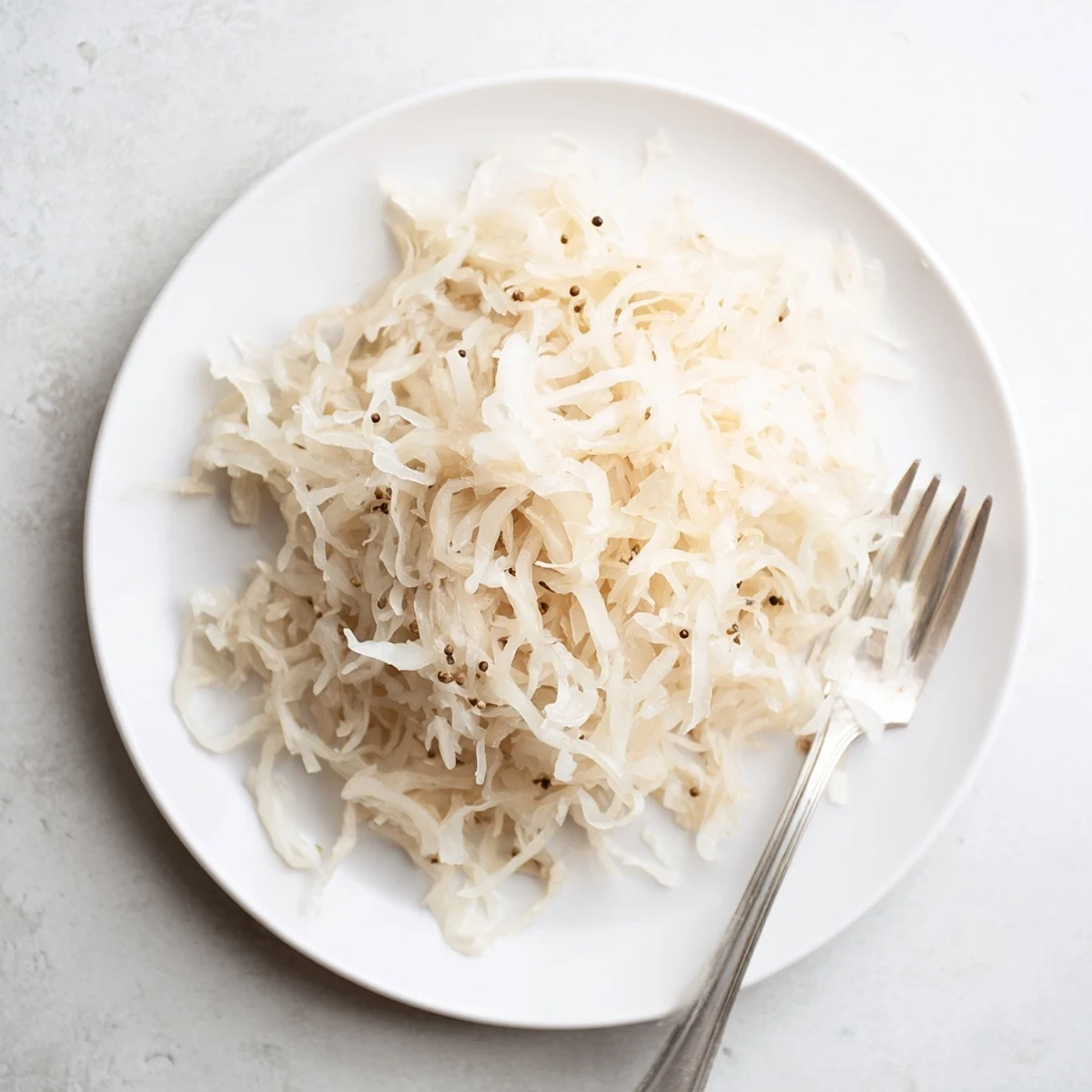
Save Bringing a jar of my own sauerkraut to a dinner party and watching skeptical friends go back for seconds was the moment I understood why this humble dish has survived hundreds of years of changing food trends.
What to Serve It With
Piled high next to bratwurst and roasted potatoes, sauerkraut becomes the sharp bright note that cuts through every rich heavy element on the plate. A cold glass of dry German Riesling alongside turns a simple meal into something that feels genuinely festive.
How Long Does It Last
Properly refrigerated sauerkraut keeps for months, and I have eaten batches that were still improving after three months in the back of my fridge. The flavor deepens and mellows over time, so making extra is never a mistake.
Getting the Texture Right
The thickness of your cabbage shreds determines everything about the final texture, and learning to slice consistently changed my results overnight. A mandoline helps if your knife work is uneven, but even rough hand cut kraut has its own rustic charm.
- Thinner slices produce softer, more delicate kraut.
- Thicker slices retain a satisfying crunch throughout fermentation.
- Slice consistently so everything ferments at the same pace.
 Save
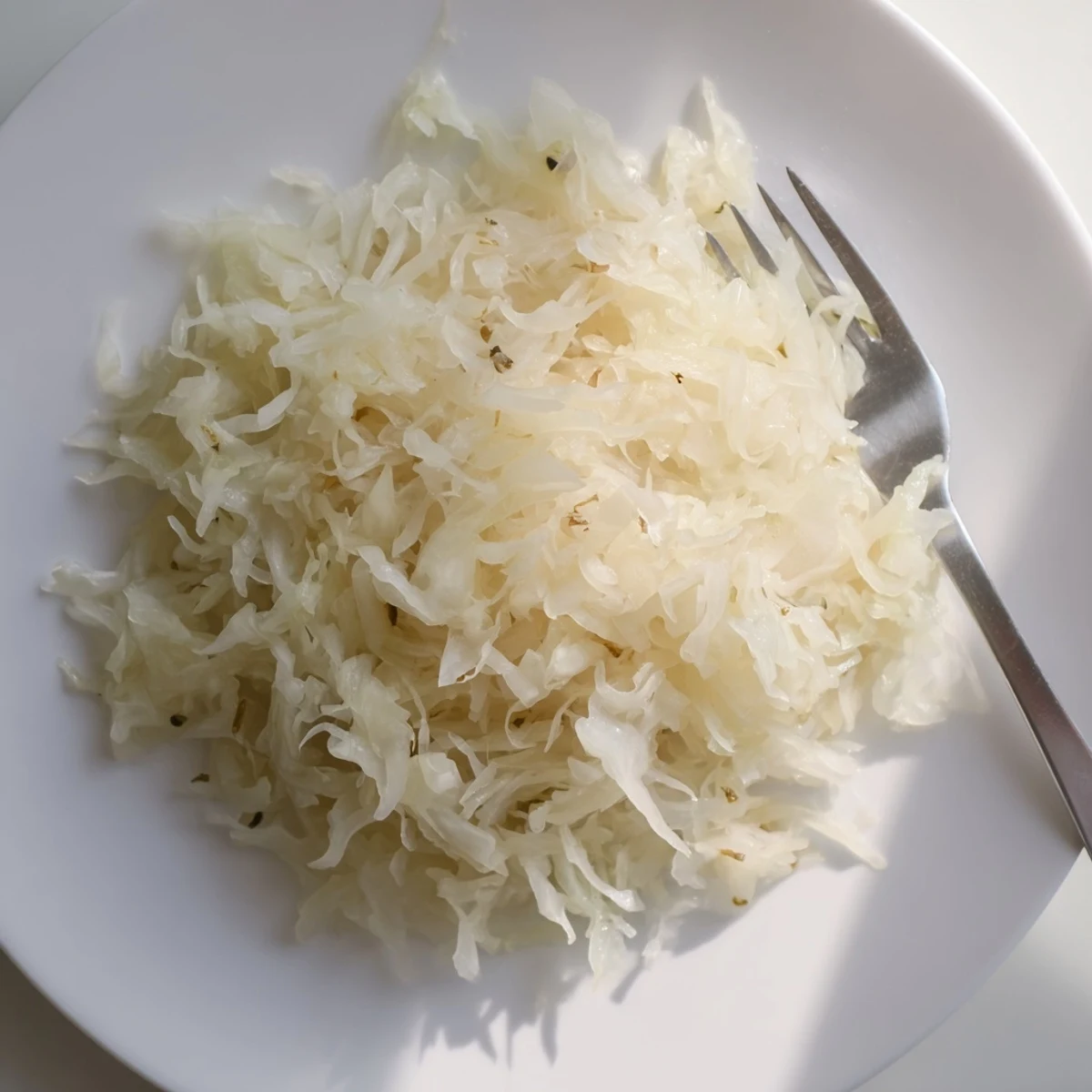
Save There is something deeply satisfying about preserving food the way our ancestors did, using nothing more than salt, time, and trust in the process.
Recipe Q&A
- → What makes sauerkraut develop its tangy flavor?
-
Natural fermentation creates lactic acid bacteria that transform sugars in cabbage into tangy compounds. This process develops gradually over 7-21 days at room temperature, with flavor intensifying the longer it ferments.
- → How do I know when fermentation is complete?
-
Taste your sauerkraut after one week, then every few days thereafter. When the tanginess reaches your preferred level, transfer to refrigeration. The fermentation slows dramatically in cold storage, preserving flavor at that stage.
- → Can I add other vegetables or spices?
-
Traditional sauerkraut uses only cabbage and salt. However, caraway seeds, juniper berries, bay leaves, grated carrot, or thinly sliced apple are common additions that add complementary flavors without interfering with fermentation.
- → What if mold appears on the surface?
-
Surface mold typically indicates oxygen exposure. Simply skim off any affected layer. If the submerged cabbage smells pleasant and tastes tangy, the remaining product is safe. White kahm yeast may form—this is harmless and can be removed.
- → How long does homemade sauerkraut last?
-
Properly fermented and refrigerated sauerkraut keeps for 6-12 months. The cold temperature significantly slows fermentation while maintaining quality. Ensure vegetables remain submerged in liquid throughout storage for maximum longevity.
- → Why is the salt-to-cabbage ratio important?
-
Salt creates an environment where beneficial lactic acid bacteria thrive while harmful bacteria cannot survive. Too little salt risks spoilage; too much halts fermentation. The standard ratio is approximately 1.5-2% salt to cabbage weight.