
 Save
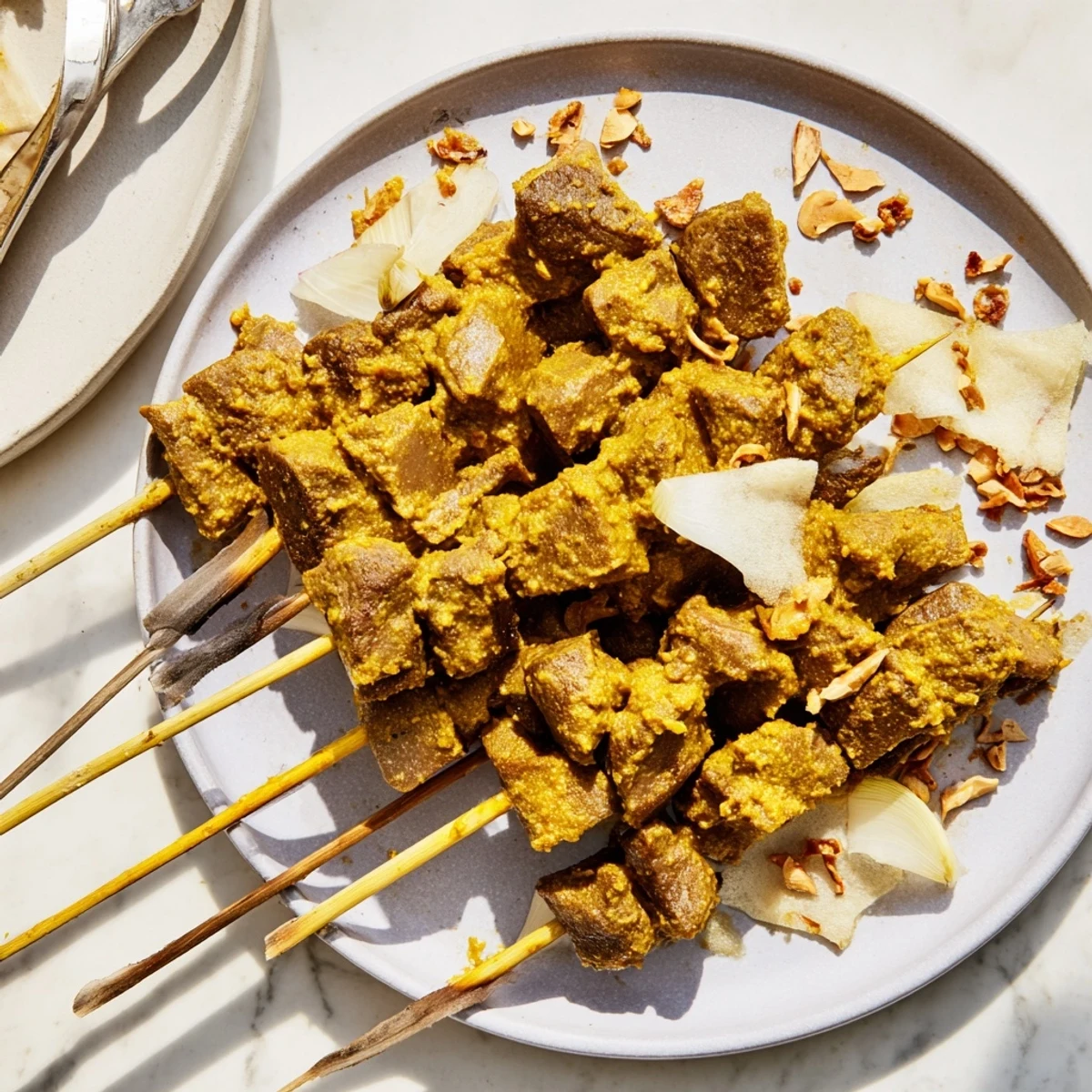
Save These skewers feature slowly simmered beef brisket grilled to smoky perfection, then drenched in a vibrant yellow sauce thickened with rice flour. The sauce, infused with aromatic spices like turmeric, coriander, cumin, and candlenuts, delivers the authentic bold flavors of West Sumatra. Perfect for grilling season, these skewers pair wonderfully with sliced rice cakes and a cold lager.
The first time I encountered Sate Padang was at a bustling night market in Jakarta, where the charcoal smoke hung thick in the humid air and vendors called out their specialties. My Indonesian friend guided me to a stall where the skewers arrived glistening with an impossibly rich, dark sauce that smelled of toasted spices and things I couldn't name. One bite and I understood why people line up for this dish. That memory of flavors hitting my tongue has haunted my kitchen ever since.
Last summer I attempted this for my very skeptical father, who grew up eating authentic Sate Padang in Padang itself and has deemed every American version disappointing. He watched me prepare the spice paste, his arms crossed, barely offering guidance until I started grinding the candlenuts. When he finally tasted the finished dish, he went quiet for a long moment before asking for my recipe. Now he requests it whenever he visits, calling it surprisingly legitimate for something made outside West Sumatra.
Ingredients
- 600 g beef brisket or shank: These tougher cuts break down beautifully during boiling, becoming meltingly tender while retaining enough structure for skewering
- 2 bay leaves: If you can find Indonesian daun salam, use them, but regular bay leaves work in a pinch for that subtle earthy backbone
- 2 kaffir lime leaves: Tear them before adding to release their citrusy perfume that cuts through the rich sauce
- 2 lemongrass stalks: Bruise them with the back of your knife to help them release their essential oils into the boiling liquid
- 6 shallots: These provide the sweet aromatic base that Indonesian cuisine relies on, more delicate than onions
- 4 garlic cloves: Don't be shy with garlic, it mellows beautifully during the sauce cooking process
- 3 red chilies, seeded: Adjust based on your heat tolerance, remembering that the seeds carry most of the fire
- 2 candlenuts: Macadamia nuts make an excellent substitute if candlenuts prove impossible to source
- 2 tsp ground coriander: Warm and slightly citrusy, this is the bridge between the aromatic and heating spices
- 1 tsp ground cumin: Earthy and essential, use fresh cumin if possible as it loses potency quickly
- 1 tsp turmeric powder: This gives the sauce its characteristic golden hue and subtle bitter note
- 1 tsp ginger and galangal: Both are necessary, ginger provides heat while galangal adds piney complexity
- ½ tsp ground white pepper: White pepper instead of black maintains the sauce's color while providing gentle heat
- 2 tbsp rice flour: The traditional thickener that creates that velvety texture without altering the flavor profile
- 400 ml beef stock: Save the liquid from boiling the beef, it's packed with flavor and essential for the sauce
- Fried shallots: Don't skip these, they provide the crucial crispy contrast to the tender beef and rich sauce
Instructions
- Boil the beef until perfectly tender:
- Combine the beef cubes with water, bay leaves, kaffir lime leaves, bruised lemongrass, and salt in a large pot. Bring to a boil then reduce to a gentle simmer for 45 to 60 minutes until the beef yields easily to a fork. Remove the beef and reserve that precious stock.
- Prepare the aromatic spice paste:
- Blend the shallots, garlic, chilies, candlenuts, coriander, cumin, turmeric, ginger, galangal, and white pepper until completely smooth. The paste should be creamy and uniform, with no visible chunks remaining.
- Char the skewers over high heat:
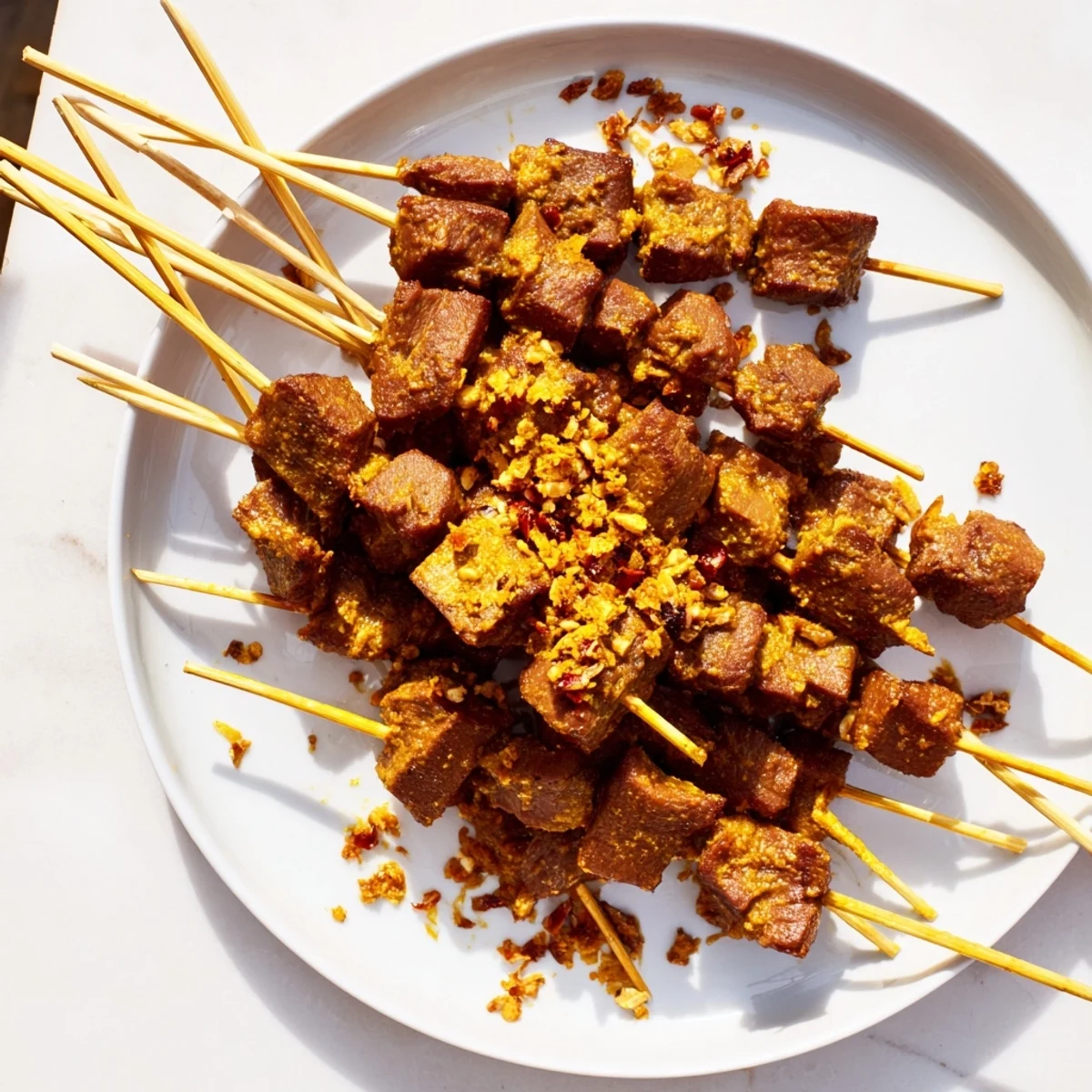
- Thread the tender beef onto soaked bamboo skewers, then grill over hot charcoal or a smoking hot grill pan for 4 to 6 minutes. Turn frequently and baste with a little oil until you achieve those characteristic charred edges.
- Build the rich sauce base:
- Heat oil in a saucepan and sauté the spice paste until it transforms, becoming deeply fragrant and losing its raw smell after about 3 to 4 minutes. The oils will start to separate, and your kitchen will smell incredible.
- Add the stock and thicken:
- Pour in 400 ml of the reserved beef stock along with salt and sugar, then bring to a gentle simmer. Whisk the rice flour with a little water to create a smooth slurry, then gradually stir it into the sauce. Cook for 3 to 4 minutes until the sauce coats the back of a spoon.
- Bring everything together:
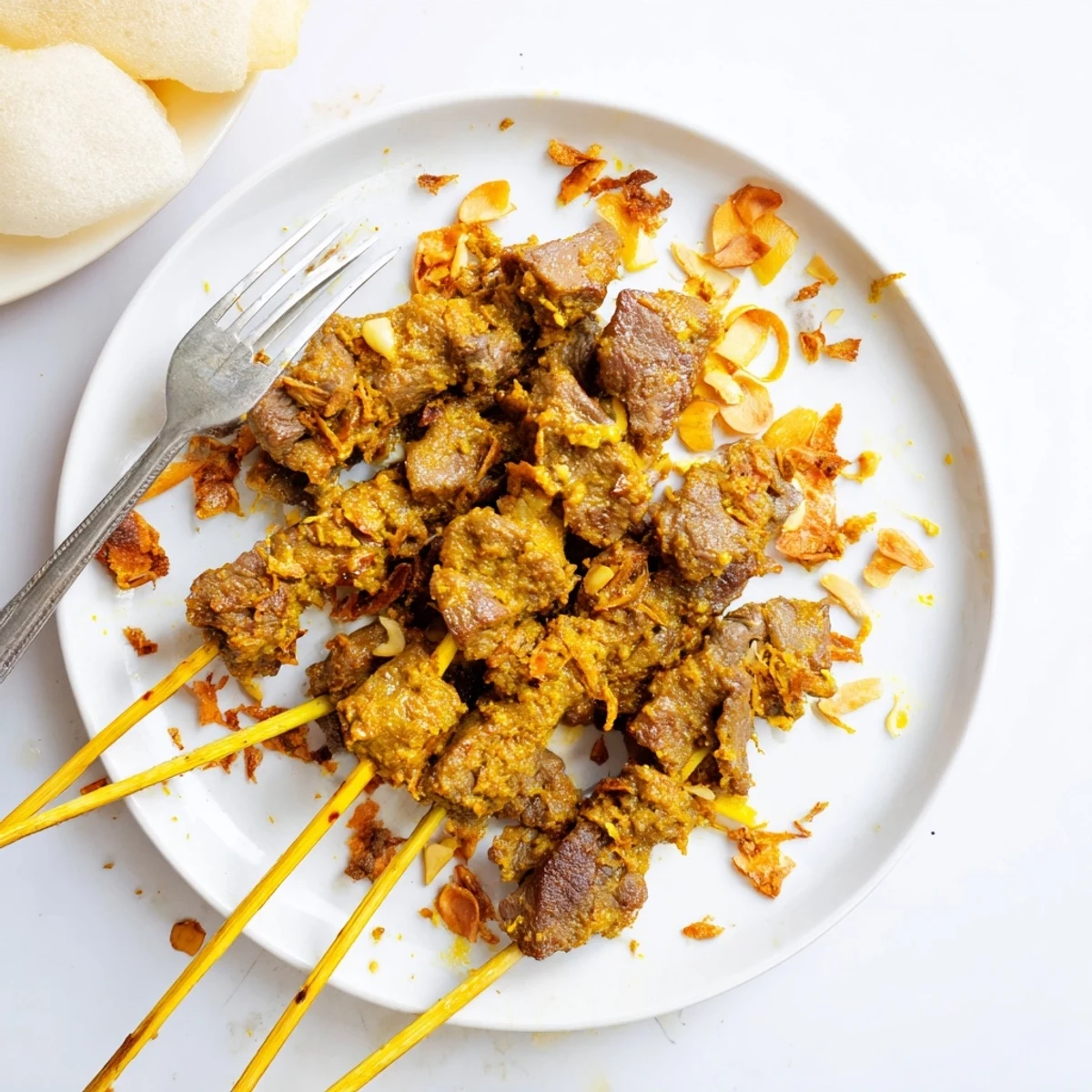
- Arrange the charred skewers on a plate and ladle that gorgeous thick sauce generously over them, ensuring every piece is coated. Scatter with fried shallots and serve alongside sliced rice cake if you've made the effort to find or make lontong.
 Save
Save This dish has become my go to for summer gatherings, where I'll set up a small charcoal grill in the backyard and let guests help themselves to skewers hot from the fire. There's something communal about standing around the grill, sauce bubbling nearby, that transforms dinner into an event worth lingering over. The conversation always flows as freely as the jasmine tea.
Getting The Beef Texture Right
I learned the hard way that rushing the boiling step results in tough, chewy skewers that no amount of sauce can rescue. The beef needs that long slow simmer to break down connective tissue, and you should test it with a fork rather than a timer. When it yields with zero resistance, it's ready for the grill. Also, cut your cubes slightly larger than you think necessary because they shrink during both cooking steps.
Building A Balanced Spice Paste
The magic of Sate Padang sauce lies in achieving the right balance between the aromatic warm spices and the fresh heat from chilies and aromatics. I've found that toasting the coriander and cumin briefly in a dry pan before grinding them deepens their flavor significantly. Don't be tempted to skip the candlenuts or their substitute, they provide the subtle richness that ties everything together.
Perfecting That Restaurant Style Sauce
The consistency of the sauce should be thick enough to coat the back of a spoon but still pour easily over the skewers. If it becomes too thick, thin it with a splash more stock or water. The sauce will continue to thicken as it cools, so remove it from heat slightly earlier than you think necessary.
- Make extra sauce and keep it in the refrigerator, it actually tastes better the next day
- If the sauce tastes too sharp, add a pinch more sugar to balance the acidity
- Always serve the sauce hot, as it loses its luxurious texture when cooled
 Save
Save Whether you're cooking for someone who grew up with these flavors or discovering them for the first time, this dish has a way of bringing people together. The preparation itself becomes part of the pleasure, and the first bite makes every effort worthwhile.
Recipe Q&A
- → What cut of beef works best for Sate Padang?
-
Beef brisket or shank are ideal choices because they contain connective tissue that breaks down during simmering, resulting in tender, succulent meat that holds up well on skewers and absorbs the bold Padang flavors beautifully.
- → Can I make the sauce less spicy?
-
Absolutely. Reduce the number of red chilies in the spice paste, or remove the seeds for milder heat. The aromatic spices will still deliver authentic Padang flavor without the intense spice level.
- → What is the traditional way to serve Sate Padang?
-
Authentic Sate Padang is served with the thick yellow sauce poured generously over the grilled skewers, accompanied by lontong (compressed rice cakes) and garnished with crispy fried shallots. The sauce should coat each piece generously.
- → How do I achieve the thick sauce consistency?
-
The traditional thick texture comes from rice flour slurry added to the simmering beef stock and spice paste. Whisk the flour with cold water before adding to prevent lumps, and stir constantly while the sauce thickens.
- → Can I grill these skewers indoors?
-
Yes. While charcoal adds authentic smoky flavor, a grill pan or cast-iron skillet over high heat works well. Baste with oil while cooking to achieve the slight char that gives these skewers their characteristic grilled taste.
- → What can I substitute for candlenuts?
-
Macadamia nuts or cashews make excellent substitutes for candlenuts, providing similar rich, buttery texture and mild flavor that helps thicken and enrich the spice paste.